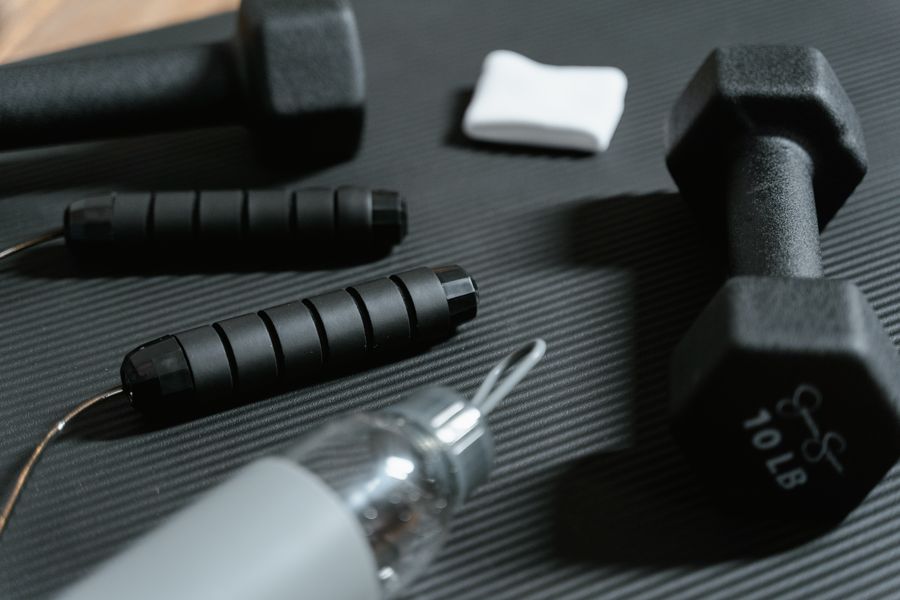
Resistance bands
Resistance bands are the most space-efficient training tool there is - a full set fits in a drawer and can load every major movement pattern. They are a staple of home workouts, warm-ups, accessory work and rehabilitation-style training.
Two main types: loop bands (continuous bands, often called booty or glute bands) and flat/therapy bands with handles (long straps you step on or anchor). Both come in colour-coded resistance levels - usually light, medium, heavy - though the actual force varies by manufacturer, so read the listed resistance in kilograms or pounds rather than trusting the colour alone.
Look for bands with clean edges, no ragged cuts, and resistance labels you can see on the packaging. Latex bands offer the most stretch; fabric loop bands are softer on skin and less likely to roll. Replace any band that cracks, stretches unevenly or loses its snap.
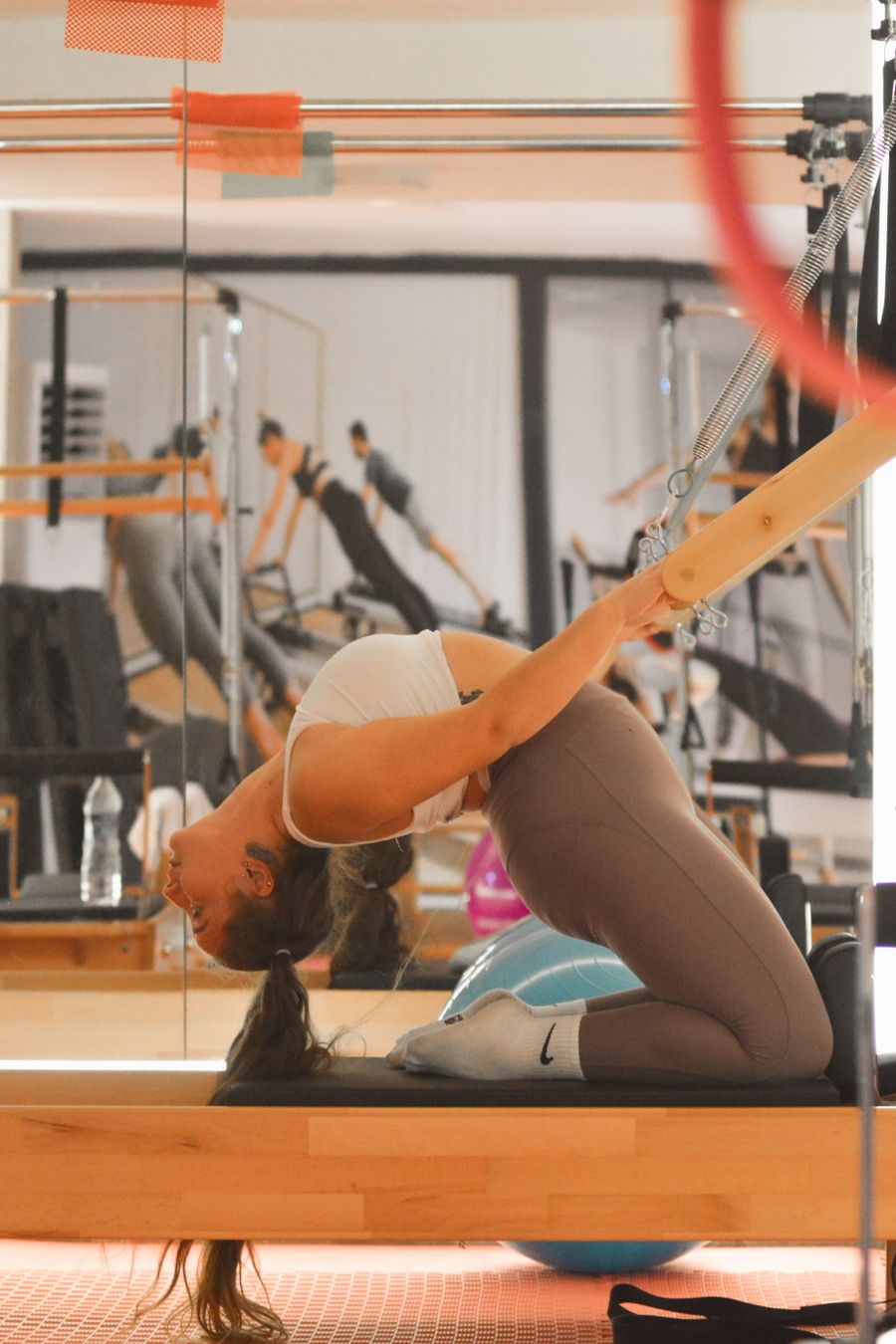
Beginner tip: a set of three loop bands in light, medium and heavy - plus one long flat band - covers almost everything a beginner needs.
Exercise mats
An exercise mat does more than cushion the floor: it provides a non-slip, easy-to-clean surface and protects flooring. The distinction between exercise mats and yoga mats matters. Yoga mats are thin, grippy surfaces for standing balance work; exercise mats are usually thicker, wider and softer, designed for floor-based work like core exercises, stretching and bodyweight drills.
Choose thickness for your use - roughly 8-15 mm suits most floor work - and a folding or roll-up model that fits your storage. Look for closed-cell foam or wipe-clean surfaces, and check that the mat stays put on the floor beneath it. Clean it after sweaty sessions and let it dry before storing. The full breakdown is in How to Choose an Exercise Mat.
Jump ropes
A jump rope turns a tiny patch of floor into a demanding cardio and coordination session. For home use, a speed rope (lightweight cable with handles) is the standard for skipping, while weighted ropes add upper-body loading and slower, more deliberate reps.
Length adjustability is the key feature - you should be able to set it so the handles reach around your armpits when standing on the middle, then fine-tune from there. Look for smooth-spinning bearings in the handles, a coating that will not shred your floor, and for beginners a slightly heavier, slower rope that teaches timing before adding speed.
Clear the ceiling height around you: rope ends travel above your head, so a fan or low lamp will not survive enthusiastic skipping.
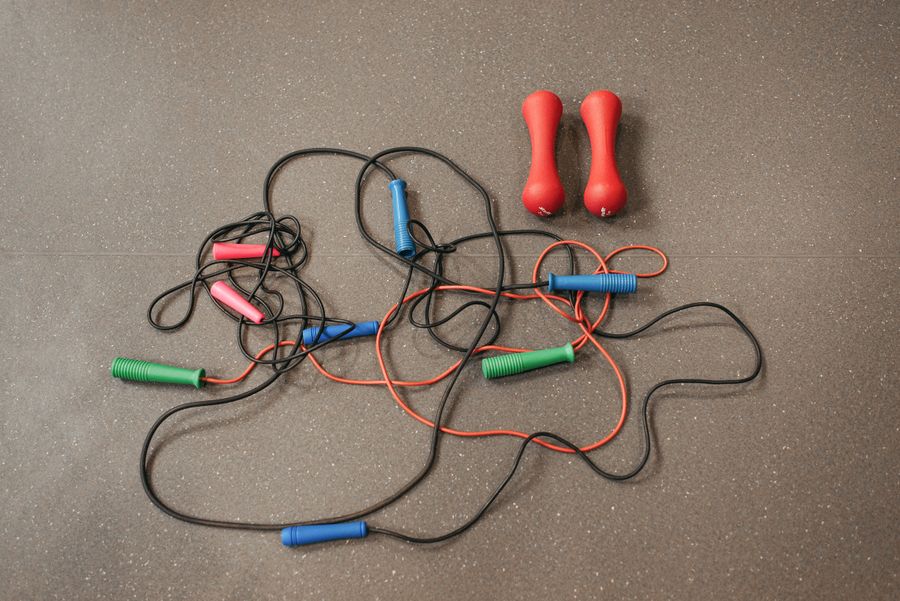
Stability equipment
Stability balls (Swiss balls), balance boards and wobble cushions add an instability challenge that recruits smaller stabilising muscles during exercise. They are genuinely useful for core work and seated balance, but they are not magic - instability does not automatically mean a better workout, and done carelessly it increases the risk of awkward falls.
For stability balls, size is chosen by your height: roughly 55 cm for shorter bodies, 65 cm for average, 75 cm for taller people - always check the manufacturer's height guide. A heavy-duty, slow-release model is safer than a hard, bouncy one. Inflate it to the firmness on the label, test it on a stable floor, and keep children and pets away when it is inflated.
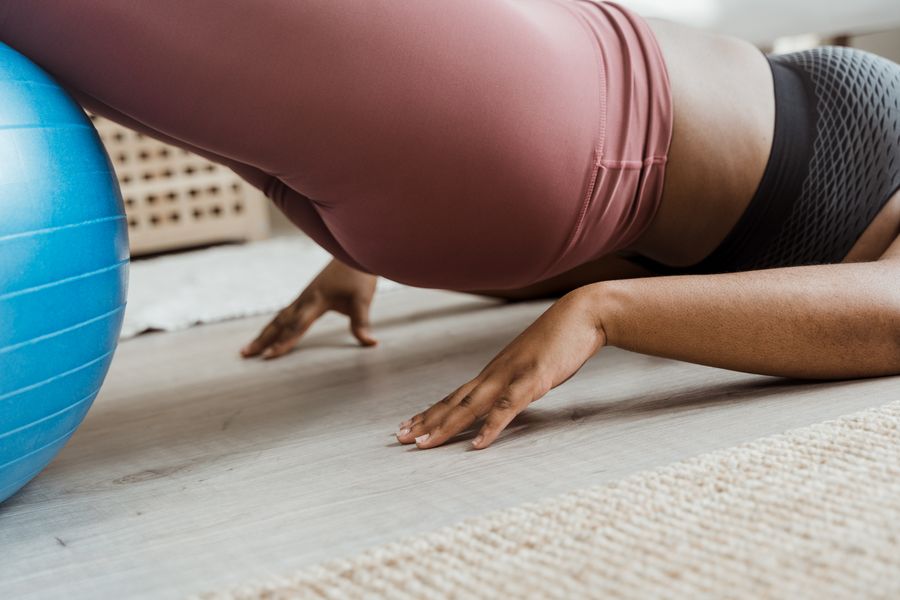
Mobility and recovery equipment
Foam rollers, massage balls and lacrosse balls help with gentle self-massage and mobility work before or after training. Rollers come in varying density - soft and textured versions for comfort, firm and knobby ones for deeper pressure - and solid core rollers keep their shape under sustained body weight.
These tools are about feeling, not forcing. Apply gradual, tolerable pressure, breathe, and never roll directly onto a joint or a painful area. If anything feels sharp or worsens pain, stop and seek professional advice.
Core training accessories
Everything from the mat to the stability ball supports core work, but a few dedicated tools exist - ab wheels, sliders and suspension straps being the common ones. An ab wheel is a compact, humbling tool for braced rolling exercises; sliders turn any smooth floor into gliders for plank variations. Both are inexpensive and excellent when used with good form.
Notably, none of these accessories are necessary. Bodyweight plank variations and carefully loaded carries already build real strength. Buy core gadgets when you specifically enjoy them - the tool will not outwork your technique.
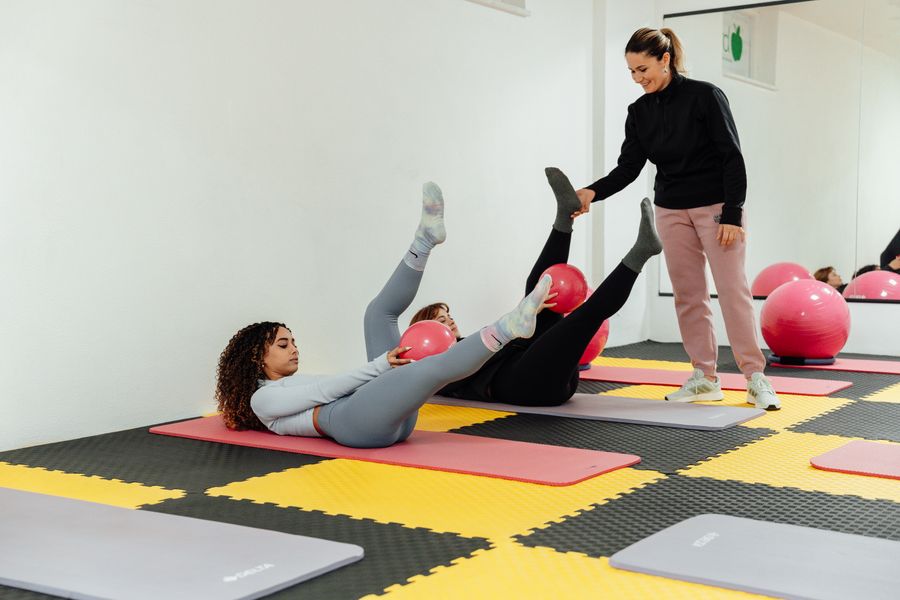
Lightweight home workout equipment
Beyond the categories above, a small collection of light gear - a water-filled or sandbag-style adjustable load, mini wrist or ankle weights, and hand grips - can add variety to home sessions. Water or sandbags that let you adjust load gradually are especially practical: they fill up as you progress and store flat when empty. For loaded carries and indoor conditioning, they rival fixed dumbbells for versatility.